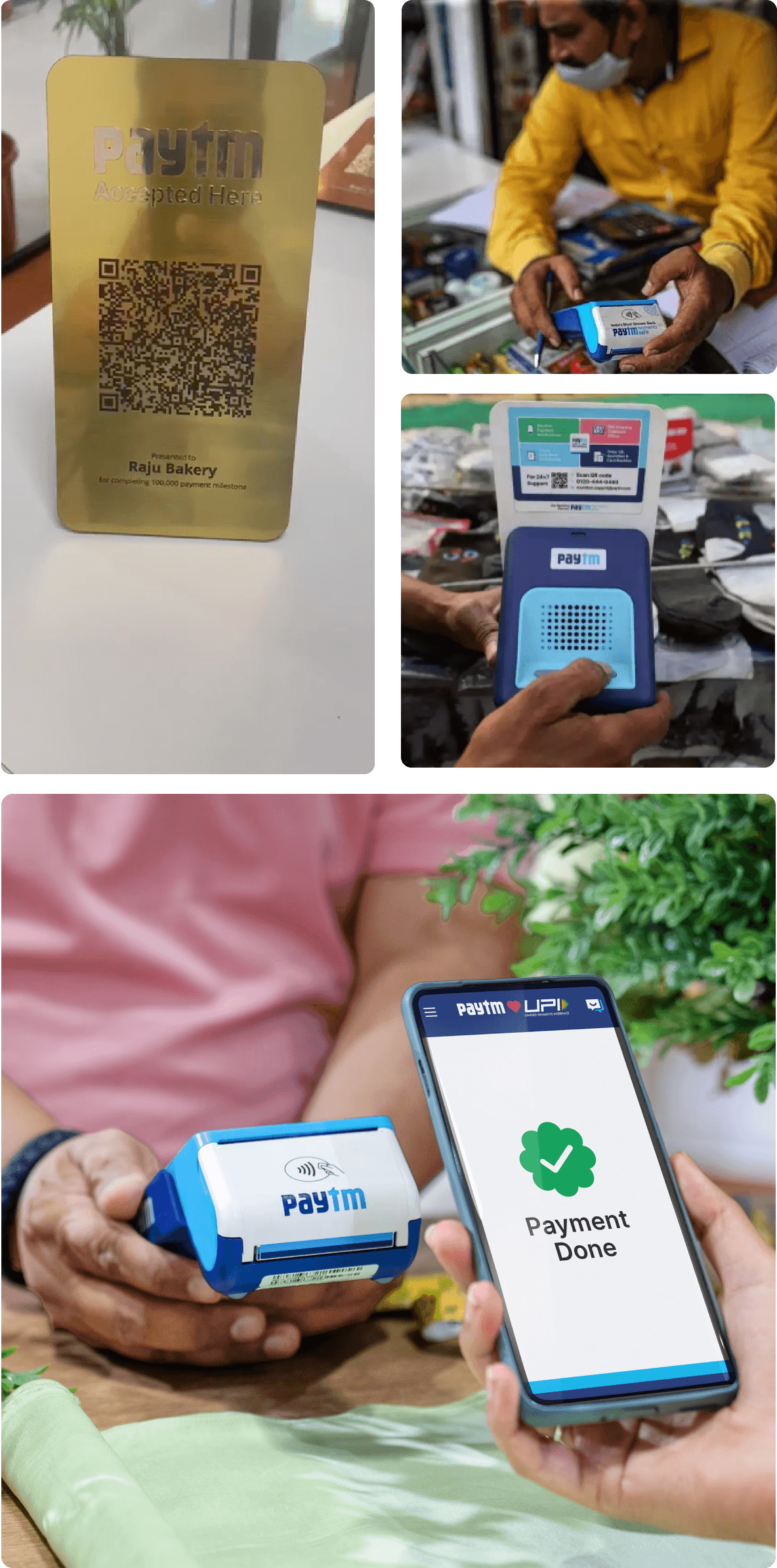
Project Brief
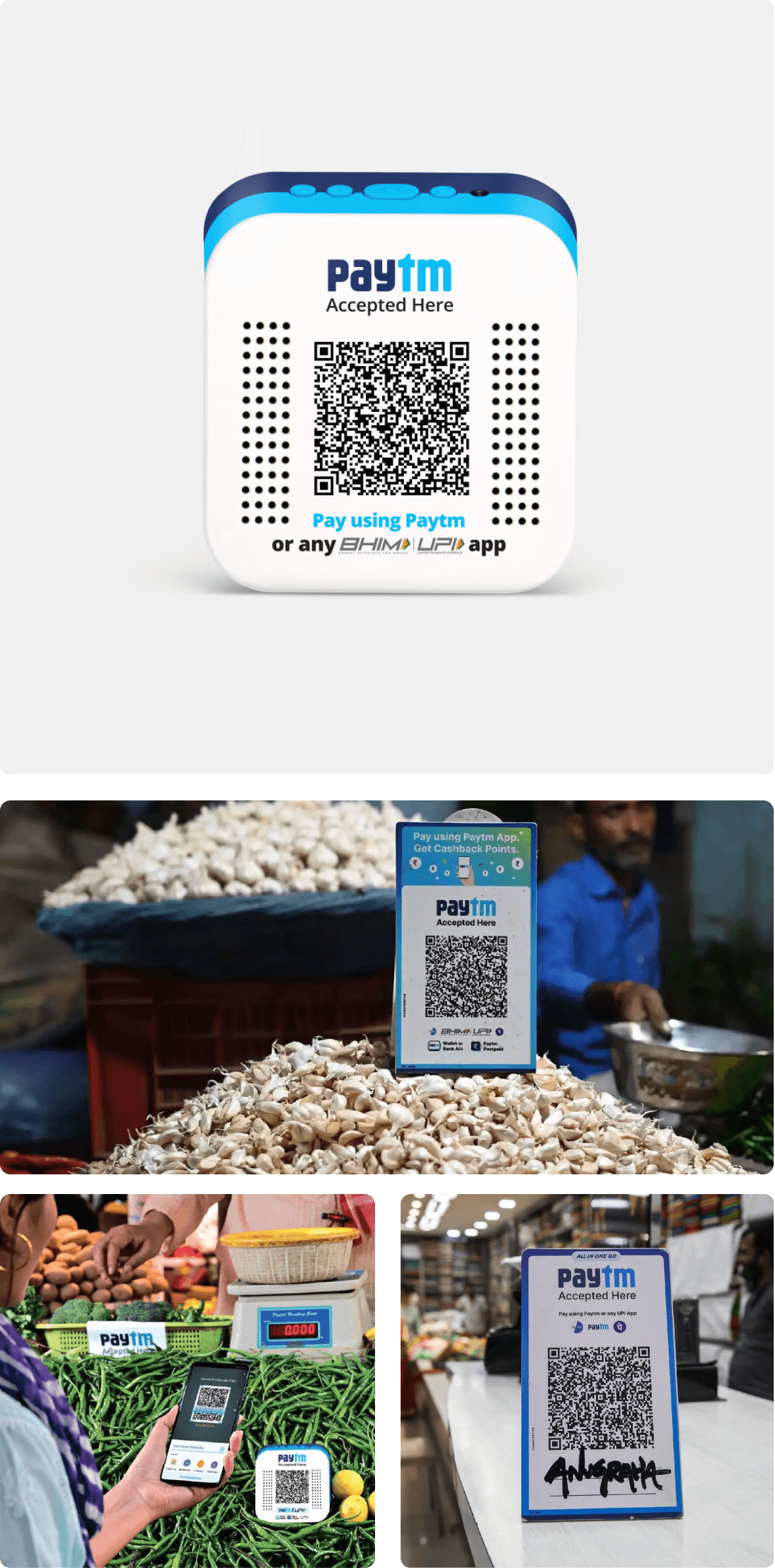
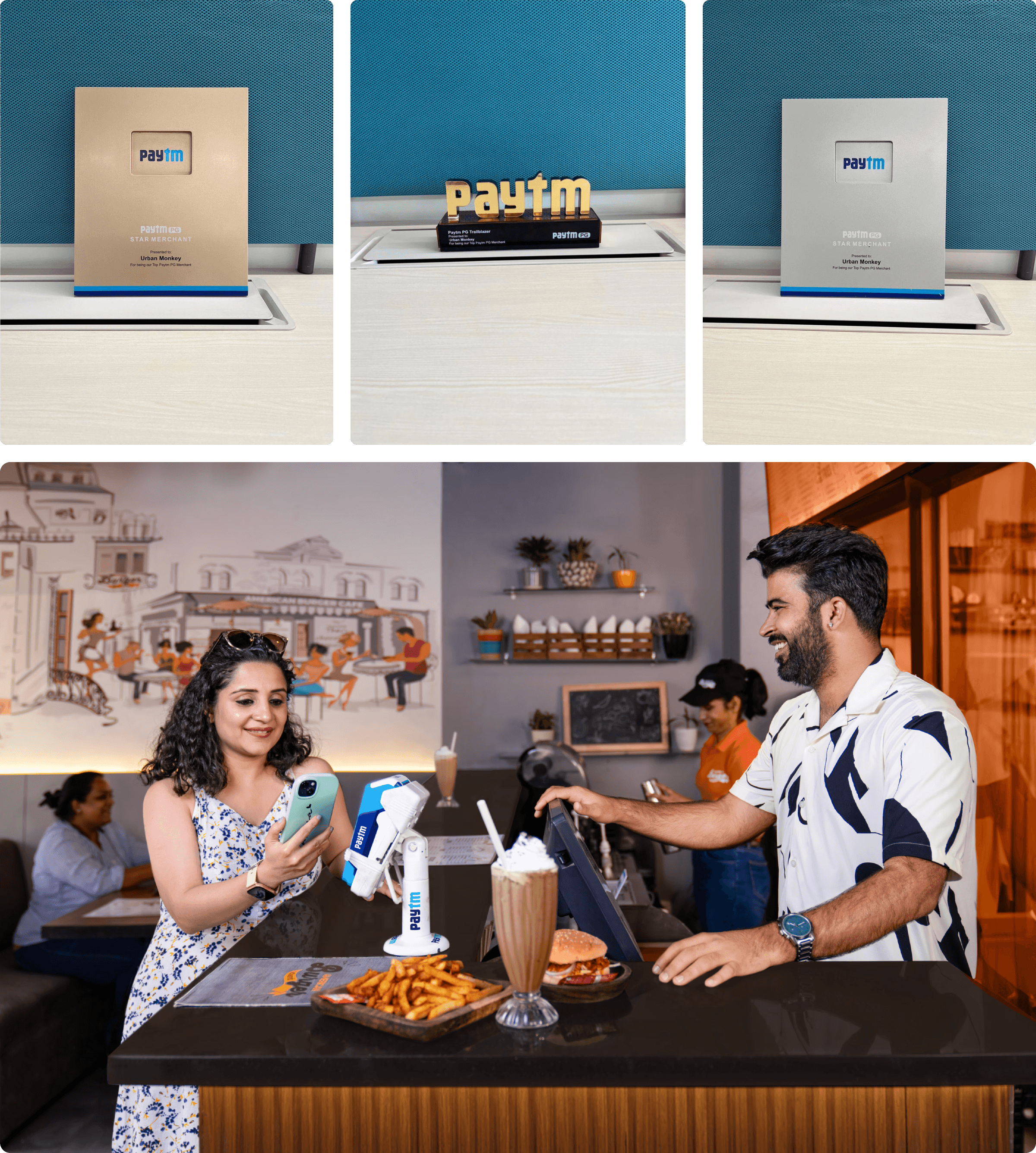
The project involved designing & branding Paytm’s in-store payment devices. With a network of approximately 34 Mn merchants & 5.8 Mn devices deployed (Q3 FY24), this segment is a key revenue driver for the company. The goal was to create devices for every business type ranging from small street vendors to large enterprises enhancing Paytm's visibility & brand recognition.
Objective
To create a cohesive design language for Paytm’s in-store payment devices that caters to diverse business segments from micro -business owners to large enterprises. Our aim was to develop a unified product portfolio that maintains Paytm’s identity, boosts merchant adoption, and drives consumer trust, ultimately supporting Paytm’s position as a leading payment solutions provider in India.
Junior Manager
Role
Oct '20 - May '23
Duration
9 Members
Team Strength
5.8 Million
Devices Deployed (Q3 2023)
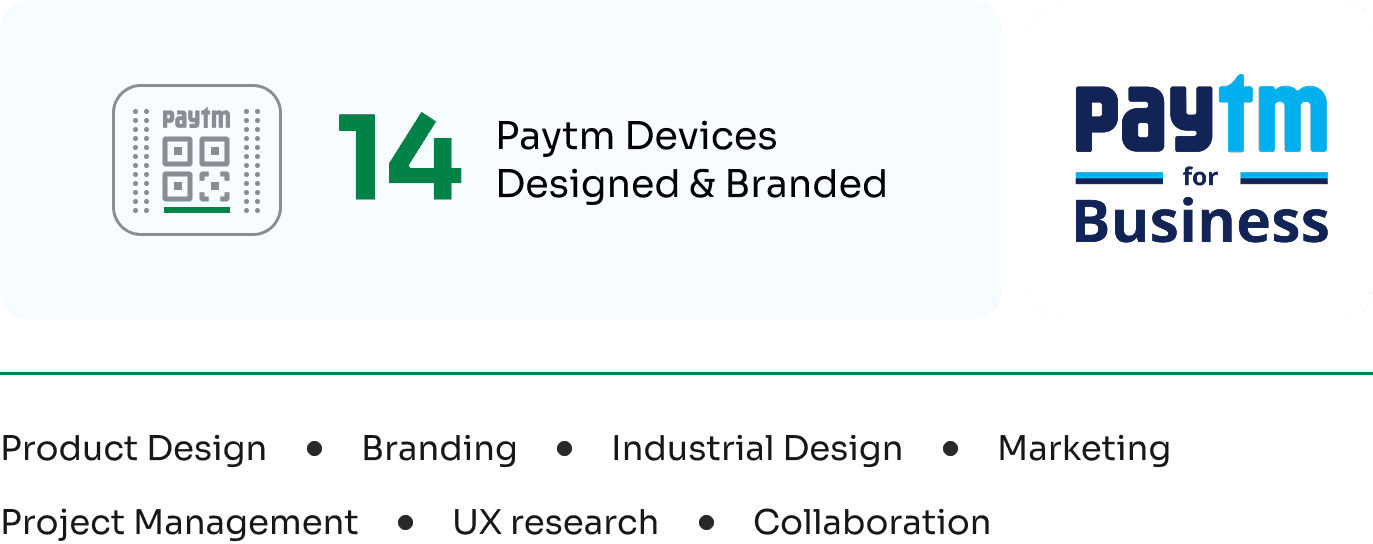
Deliverables
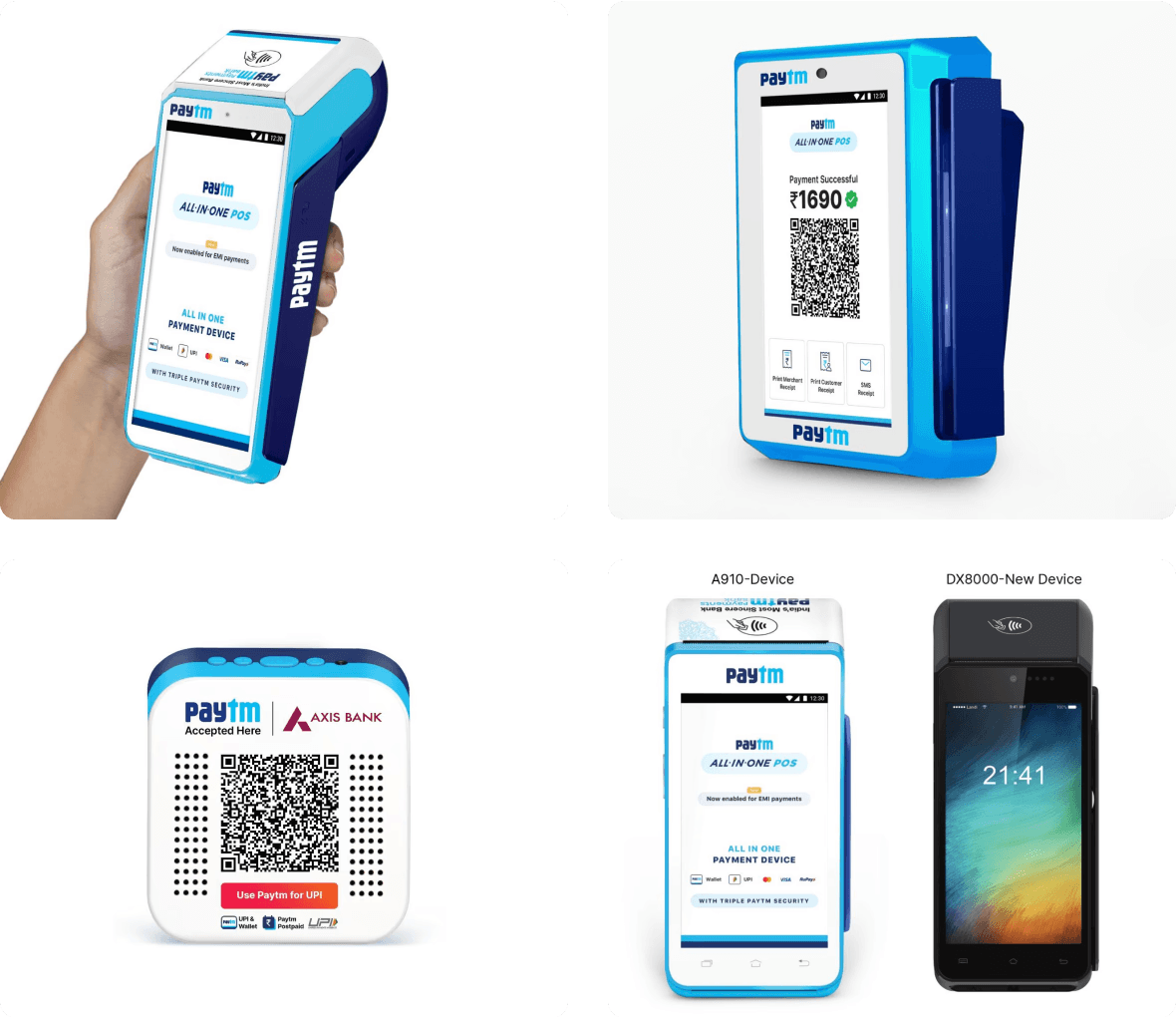
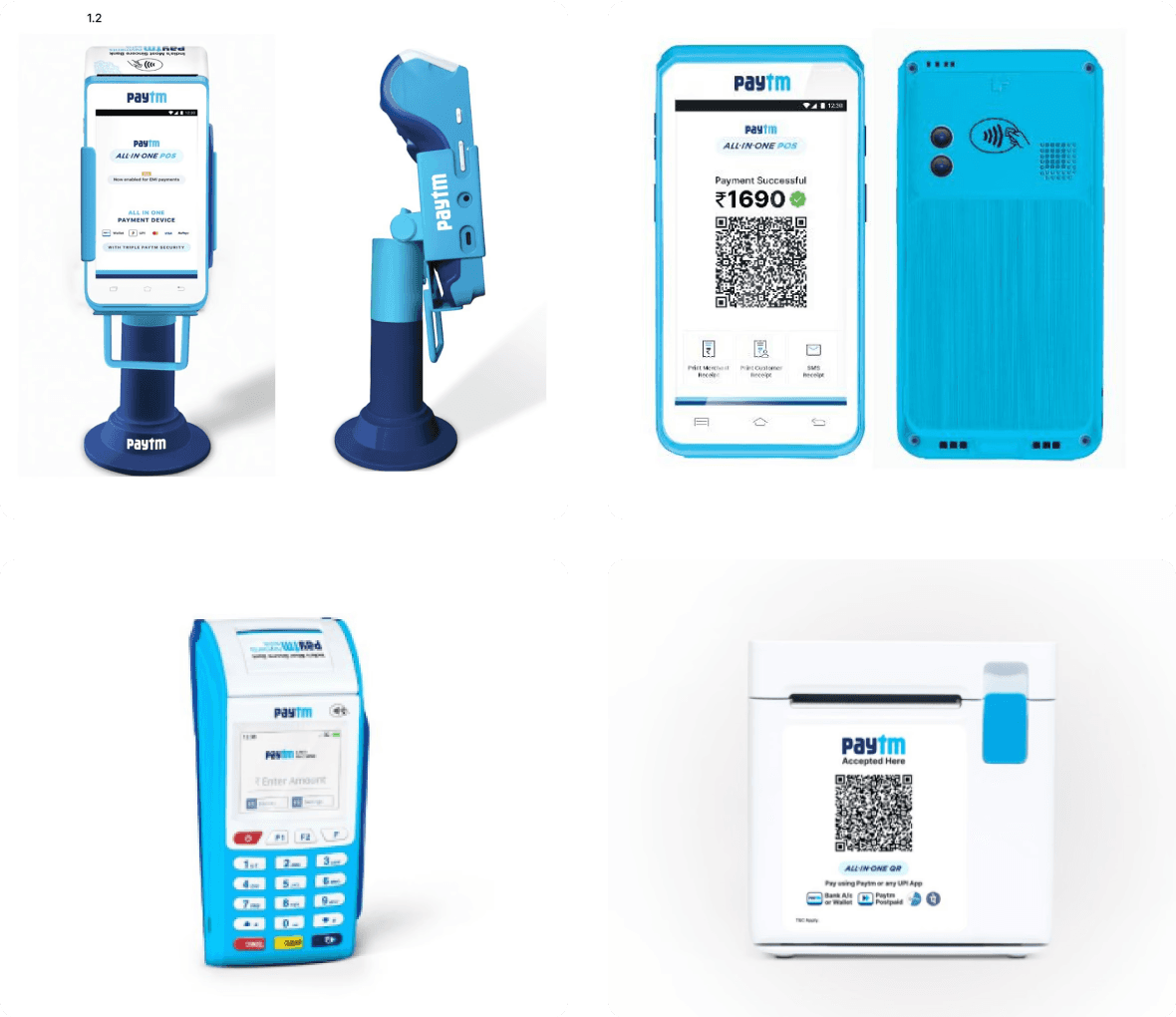
The Problem
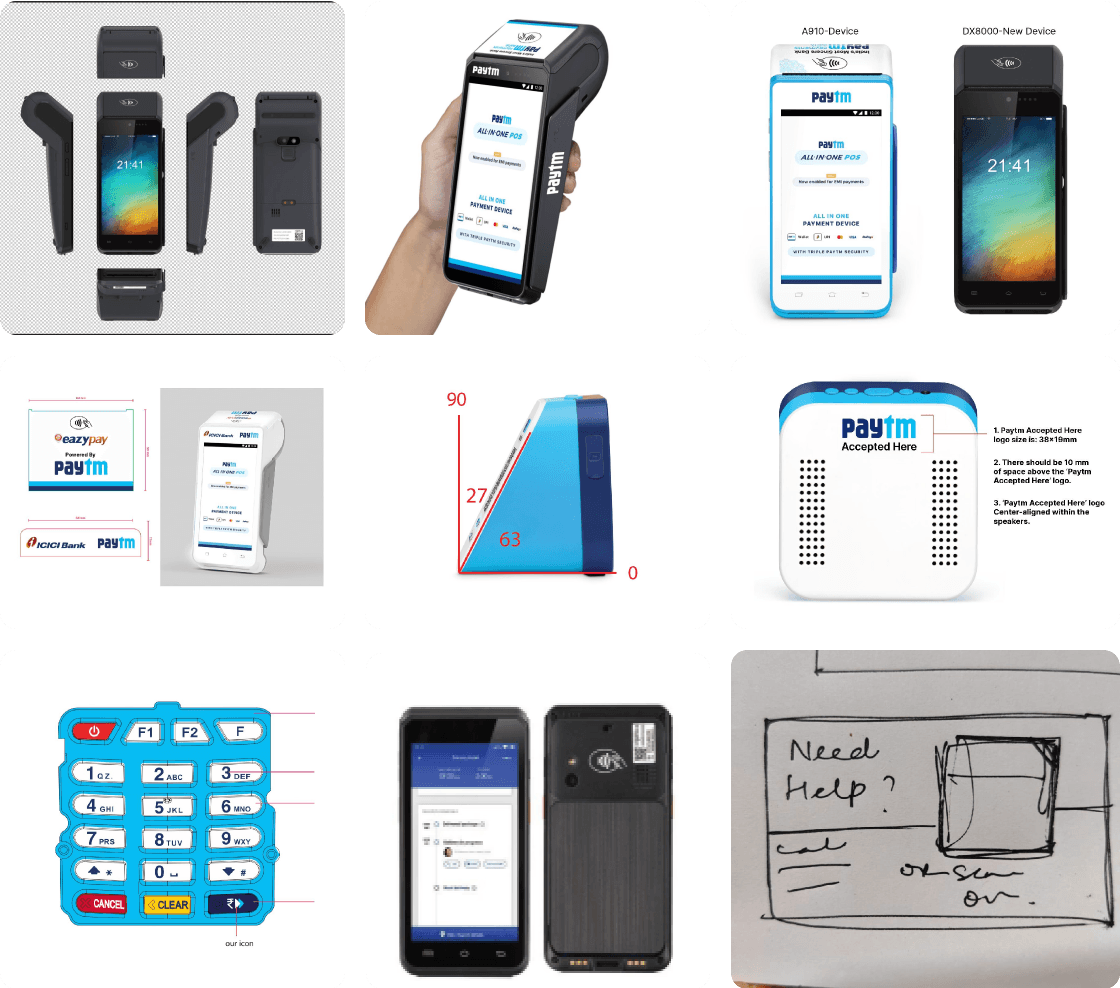
The payment device market presented various existing solutions that lacked the versatility needed by diverse merchants across India. Our project aimed to update these devices to better serve new merchants, guided by UX research conducted in multiple states. This research revealed the necessity for multilingual and accessibility features, as some merchants required portable devices while others needed larger point-of-sale (POS) systems. By addressing these diverse needs, we sought to create a more inclusive and efficient payment solution to enhance merchant adoption.
Planning & Process
During the planning phase, we conducted a thorough competitor analysis alongside an evaluation of our market performance to identify opportunities and gaps. Many existing payment devices were generic and non-branded, highlighting the need for distinct designs aligned with Paytm's branding.
We also engaged with merchants to understand their pain points, such as usability challenges, the absence of localized language support, and the need for both portable and larger point-of-sale (POS) systems.
We identified a need for long battery life, bright and sharp displays, and voice announcements to enhance usability and accessibility, while also supporting contactless payment solutions and ensuring secure transactions. This approach effectively addresses the diverse requirements of merchants and improves the overall UX. This comprehensive approach sought to deliver a payment solution that met merchants' diverse needs and strengthened Paytm's competitive position in the market.
Execution
During the execution phase, we guided manufacturers on design elements such as colors, shapes, and logos to maintain a cohesive brand identity. Specifically, we focused on key merchant challenges related to battery life, display quality, voice assistance, multilingual support, and the integration of contactless and secure payment solutions all aimed at improving usability and accessibility.
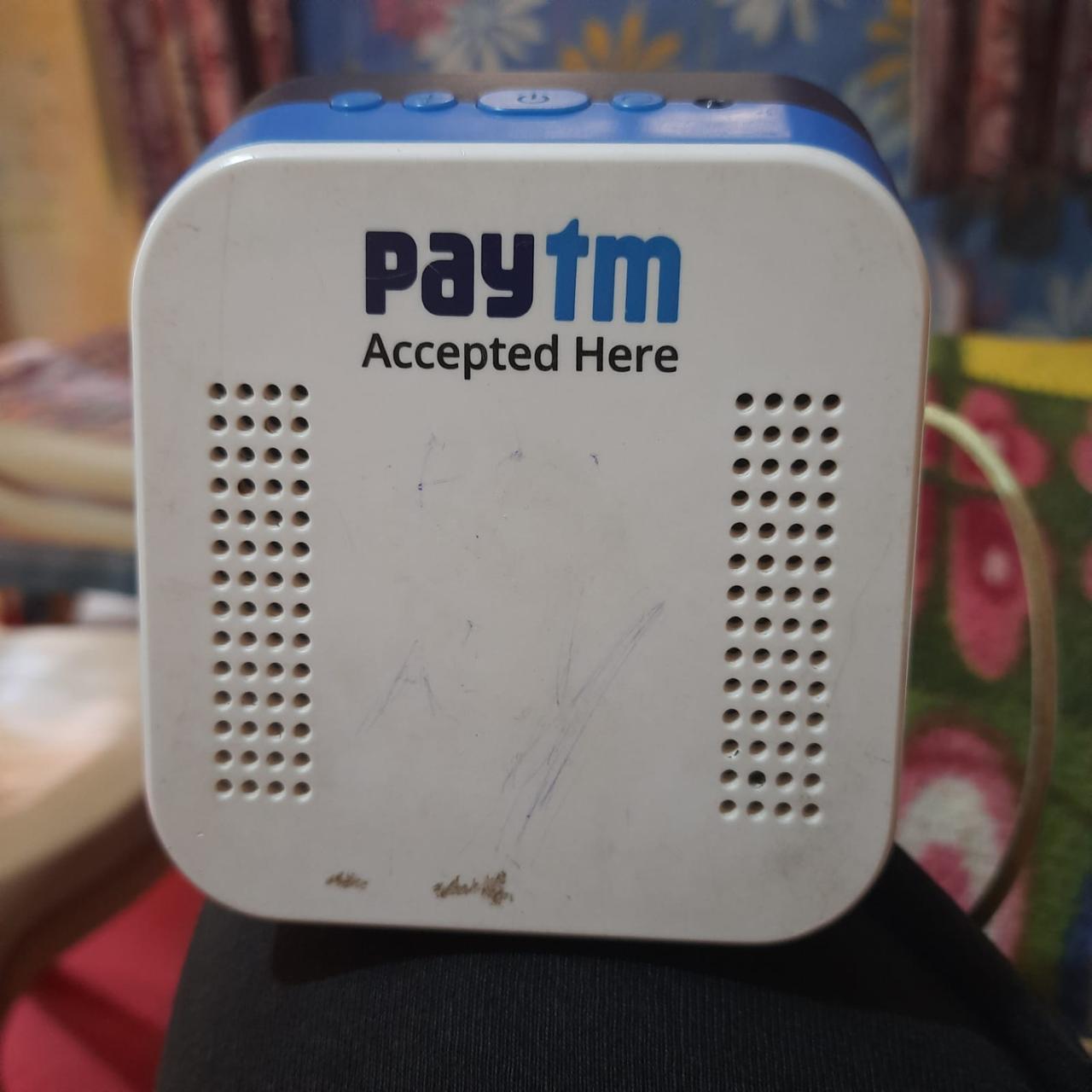
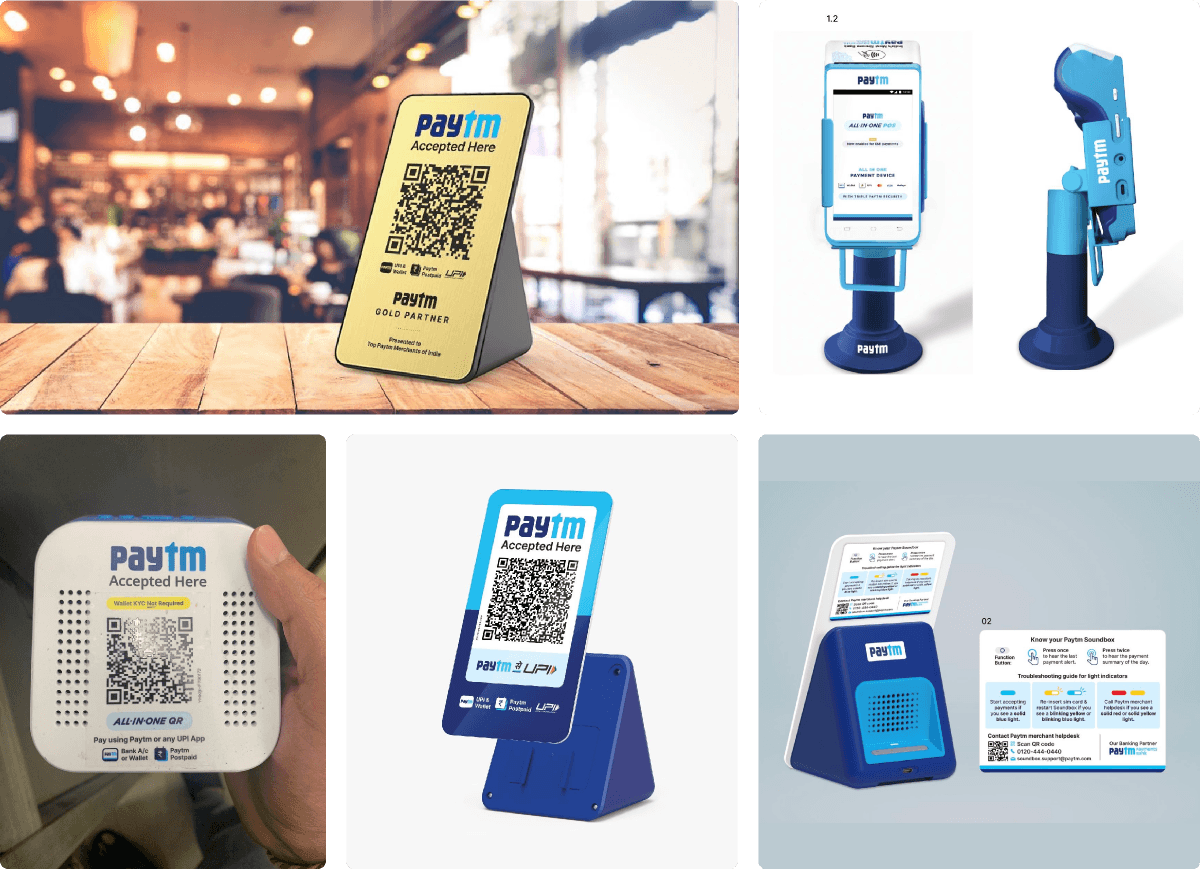
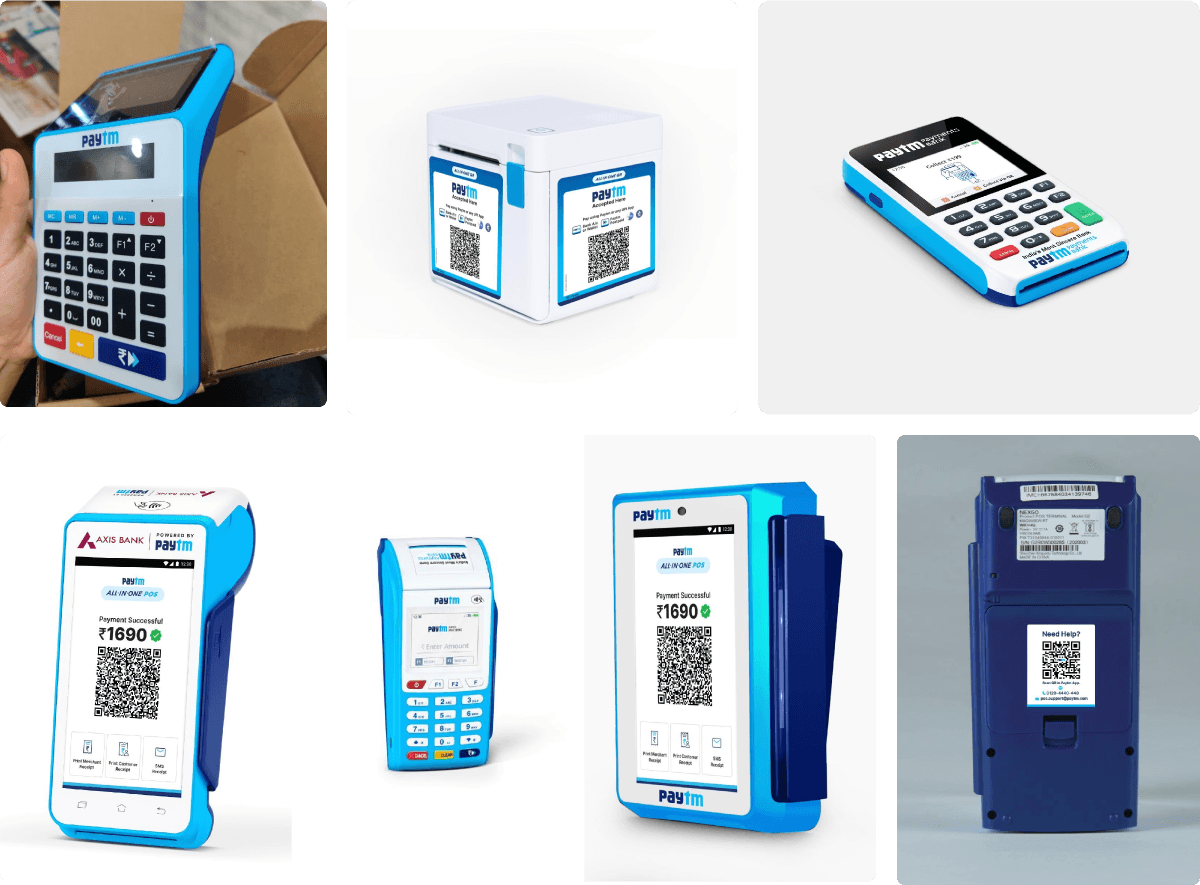
From Concept to Creation
Our efforts resulted in a payment solution that also effectively met the diverse needs of merchants and strengthened Paytm's market position. In FY 2023, Paytm acquired approximately 3.9 million new merchants subscriptions, resulting in a total of around 34 million merchants inclusive of 5.8 million payment devices deployed. This growth was driven by the increasing demand for their innovative payment solutions, including QR codes and various payment devices. Paytm reported total revenue of approximately $963 million, reflecting a 61% year-on-year growth. These outcomes reflect the successful execution of our strategy in the competitive fintech landscape.